
|
CHASE AMO (ANTI-MALARIAL OIL)COMMERCIAL / RESIDENTIAL / INDUSTRIAL Model: EM-357 Description:CHASE AMO (Anti-Malarial Oil) CHASE AMO is a ready-to-use, fast-spreading mineral oil formulation designed for application on standing water surfaces. Unlike traditional black AMO that leaves thick, sticky, oily globs, CHASE spreads instantly and evenly across the water surface without leaving heavy, dark residue. When applied, it forms an ultra-thin, fast-moving film that actively hunts down and suffocates mosquito larvae and pupae by cutting off their oxygen supply. This product is ideal for vector control programmes where speed, coverage, and clean application are priorities. CHASE does not leave thick black stains on drains, water containers, tank covers, or surrounding walls—keeping your property clean and professional-looking. TARGETS: Mosquito larvae and pupae (all species including Aedes, Anopheles, Culex) CONTENT: 25 Litres FOR USE: For use in standing water found in residential, commercial, government, and industrial sites such as:
Ideal for:
HOW DOES IT WORKMosquito larvae and pupae live in standing water and breathe through specialised structures called siphons or trumpets. These structures must reach the water surface to obtain oxygen from the air. (1) CHASE works by physical suffocation. When applied to the water surface, the oil spreads immediately into a thin, continuous film. This film blocks the larvae's breathing tubes, preventing them from accessing atmospheric oxygen. Without oxygen, larvae and pupae cannot survive and will die within 24 to 48 hours. (2) Unlike traditional AM oil, CHASE does not sit still — it hunts. Traditional black oils are thick and viscous (often exceeding 100 cSt). They form large, sticky globs that sit on the water surface, leaving dark residue. CHASE is carefully blended to an optimal viscosity of approximately 35-50 cSt — thin enough to chase across the water surface in seconds, yet thick enough to remain stable and resist breaking up in wind or rain. This ensures 100% coverage of the breeding area with no gaps where larvae can hide. (3) No heavy stains, no sticky mess. Because CHASE is a highly refined mineral oil, it will not leave thick black or dark stains on concrete drains, ceramic containers, plastic tanks, or painted walls. Your drains stay looking clean. Your water tanks remain presentable. No more scrubbing black rings off property. (4) Long-lasting physical barrier. Once applied, CHASE remains on the water surface as a stable film. It is not easily broken down by sunlight or temperature changes, providing extended protection against re-infestation. DIRECTION FOR USEShake Well Before Use. Pour or spray CHASE directly onto the surface of standing water.
For Routine Maintenance:
For Outbreak / Emergency Situations:
Important Notes:
Note:For use in non-food areas. Not for application on water intended for drinking without proper filtration. Keep out of reach of children. Wash hands after handling. Don't Let Them Hide. Chase Them. |
|
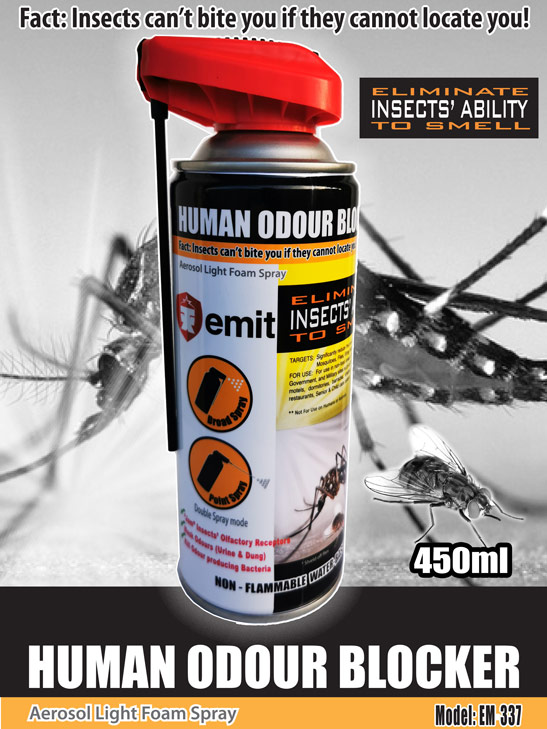
EMIT HUMAN ODOUR BLOCKER Model: EM-337 Description: TARGETS: Significantly reduce the presence of flying insects like CONTENT: 450ml FOR USE: For use in non-food areas of Residential, Commercial, Government, and Military sites such as homes, apartments, hotels, motels, dormitories, barracks, shelters, offices, airports, KTVs, restaurants, Senior & Child care centers.
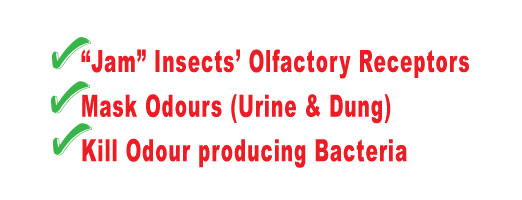
HOW DOES IT WORK DIRECTION FOR USE Note: |
Copyright © 2023 by EMIT TECHNOLOGY. All rights Reserved.
|
EMIT APOSTLE INSECT REPELLENT Description: EMIT APOSTLE INSECT REPELLENT are made with sustainably harvested oil of lemon eucalyptus and recommended natural plant based repellent against mosquitoes, flies and sandflies. The active ingredient comes from the oil of the Eucalyptus citriodora tree (also known as lemon-scented gum). It is enhanced through a simple conversion process that accelerates nature’s own maturation of the citriodora leaf. Known to regulatory authorities as Oil of Lemon Eucalyptus and Eucalyptus citriodora oil, hydrated, cyclized (EC Oil (H/C)). The Eucalyptus citriodora oil is enriched into Oil of Lemon Eucalyptus (OLE) by converting the naturally occurring citronellal (not to be confused with the far less effective citronella) into p-methane-3,8-diol (PMD). Importantly, other naturally occurring constituents unaffected by the main conversion process work synergistically to provide greater repellency than those found with synthetically derived PMD. Oil of Lemon Eucalyptus (OLE) is scientifically proven to be as effective as leading synthetic products, and far superior to alternative natural repellents. The efficacy has been tested in a leading entomology laboratory and obtained a unique level of accreditation for long-lasting repellency (more than 6 hours) for a plant-based repellent. Oil of Lemon Eucalyptus (OLE) has been cited as safe for children, and pregnant and breastfeeding women when used according to its label and instructions. TARGETS: Repel Mosquitoes, Sandflies and flies CONTENT: 50ml
FOR USE:
HOW DOES IT WORK The main component of oil of lemon eucalyptus that gives it its repellency to bugs is a chemical called p-Menthane-3,8-diol, or PMD. PMD came to the attention of U.S. scientists in the 1990s after they learned that a Chinese insect repellent called Quwenling was performing better than many other plant-based repellents. Quwenling’s main component is PMD. *Insect repellent containing OLE are as effective and long-lasting as DEET-based insect repellents according to more than 35 studies that have been conducted around the world. DIRECTION FOR USE
Application on Face and Neck
Application on Children
FREQUENT ASKED QUESTIONS Is it safe to use repellent on Children? Is it safe to use repellent on pregnant and breastfeeding women?
|
|
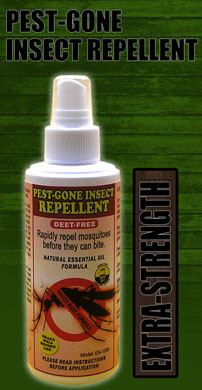
Content: 150ml (Family Size) Description: ENTA PEST-GONE INSECT REPELLENT ENTA Pest-Gone insect repellent provides quick protection against mosquitoes and other biting insects. Feels great on your skin, non-greasy and spraying a bit goes a long way in protection. Kids and elderly safe. Features: Pest-Gone insect repellent is blended with several potent plant essential oil to give our user effective protection yet pleasant experience when wearing our insect repellant. Key Features:
|
|
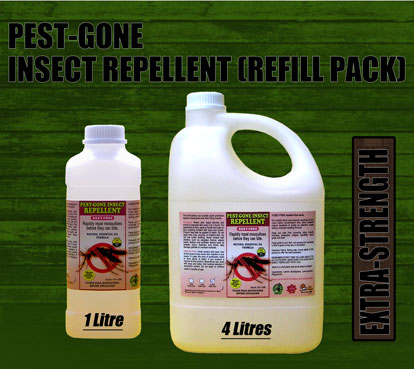
Weight: 1 Litre & 4 Litres (Refill Pack) Description: ENTA PEST-GONE INSECT REPELLENT (Refill) ENTA Pest-Gone insect repellent (Refill) provides economical refills to your existing insect repellent. It has the same repellent properties as the 150ml family repellent packing Buy big bottle to save cost! Big bulk refill packing is suitable for big groups like security guards, construction workers, army personnels, nurses, students etc. |
|
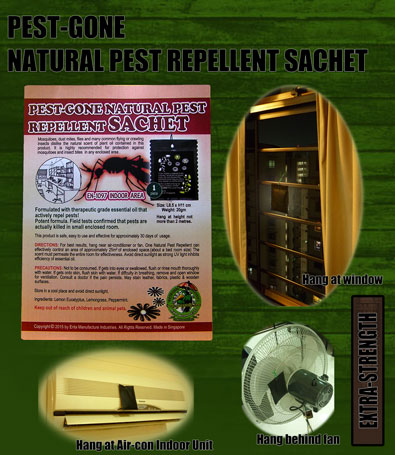
Content: 1 Sachet (Effective up to 30 days) Description: ENTA PEST-GONE INSECT REPELLENT ENTA Pest-Gone insect repellent sachet is easy to formulated with therapeutic grade essential oil that actively repel pest! Simply hang the sachet at the window, air-con unit inlet, grill behind the fan and enjoy the protection. Features: Pest-Gone insect repellent can be use for protection in small enclose room Key Features:
Note: Avoid strong UV rays or direct sunlight to sachet as essential oil degrades rapidly under strong UV light. |
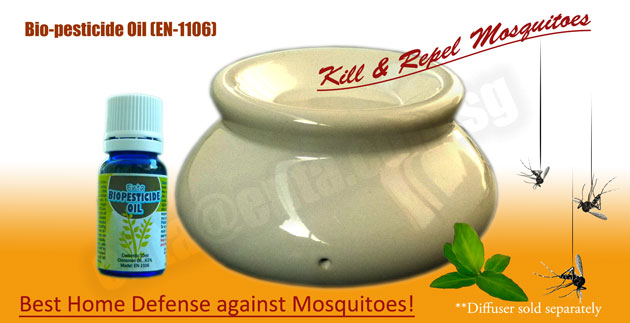
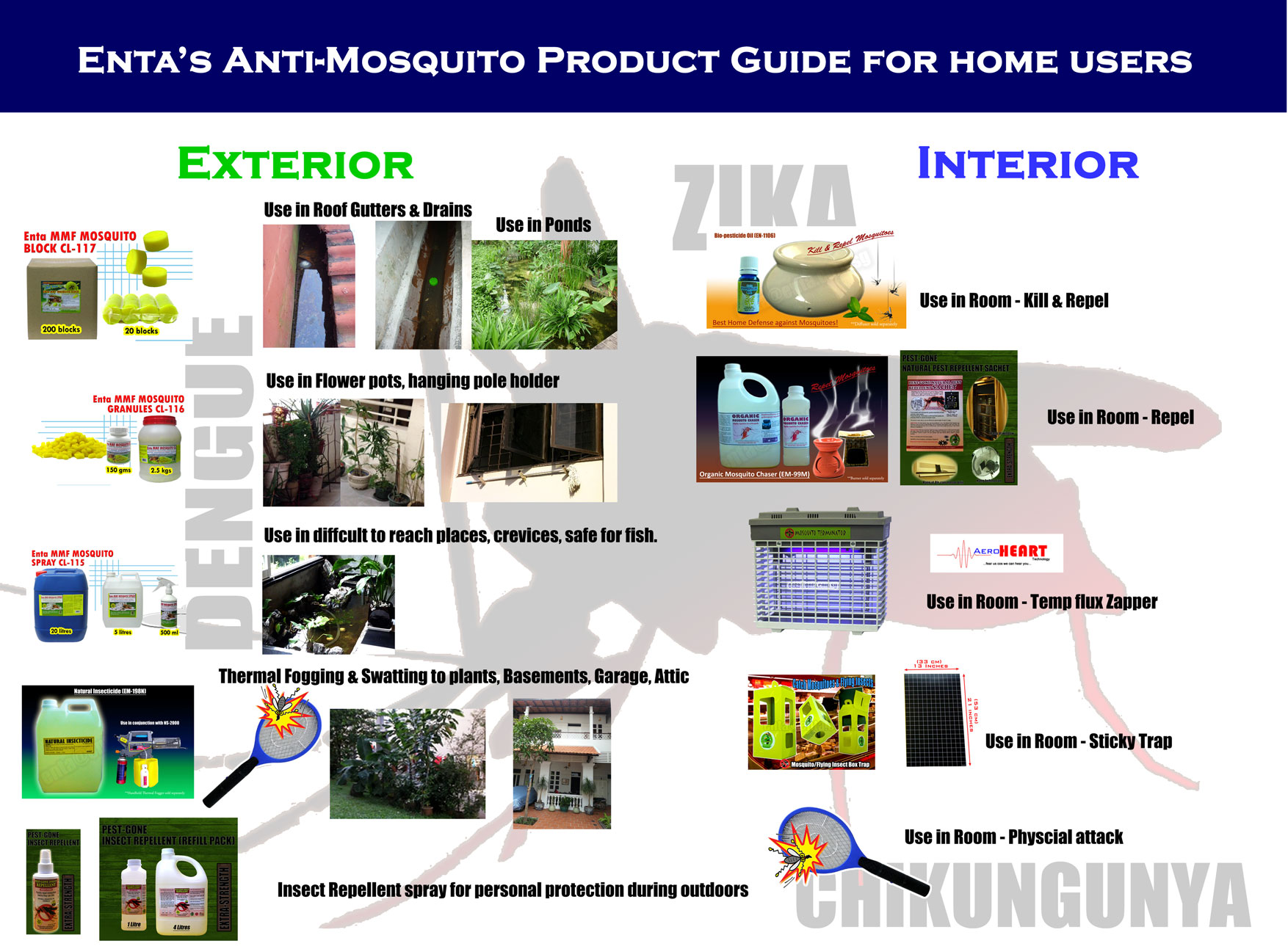
ENTA BIOPESTICIDE OIL This special blend is specially formulated to kill and repel Aedes, Culex, Anopheles, most species of mosquitoes and also various flying and crawling insects. It has anti-viral, anti fungal properties as well as being an antidepressant. Key Features:
How to use: Thermal Aroma Diffuser Candle lit Diffuser Q: What is the difference between Enta's Bio-pesticide oil and fragrances? Q: Why is the product so expensive? Q: How to know whether your product is pure and worth your every cent? Q: How does Enta's Bio-pesticide oil compared to mosquito repellent liquid vaporizer? We would recommend to people to use the more natural way where elderly and children are present. |
Made in Singapore. A product you can trust! |
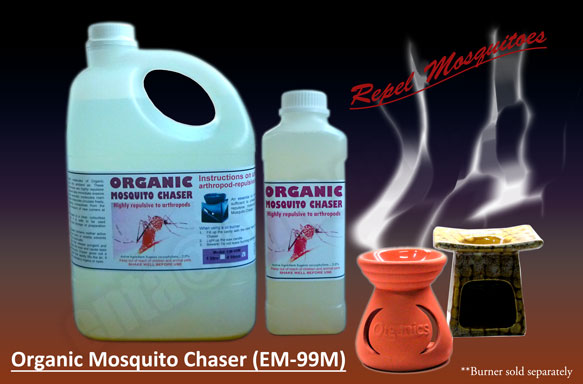
ENTA ORGANIC MOSQUITO CHASER Unleash aromatic molecules of Organic Moqsuito Chaser into the ambient air. These airborne aromatic molecules are highly repulsive to anthropods. Mosquitoes take immediate evasive action as soon as the aromatic molecules diffuse in the air. Keep invasive mosquitoes at bay with organic mosquito chaser. ENTA Organic Mosquito Chaser is a clear liquid. It is safe to be use in schools, dormitories, food storage or preparation area. Does not contain harmful chemical chemical pesticides, volatile solvents in the formulation. Hot favourite among previous dengue patients. Key Features:
How to use: Candle lit Diffuser |
Made in Singapore. A product you can trust!
|
Made in Singapore. A product you can trust! |
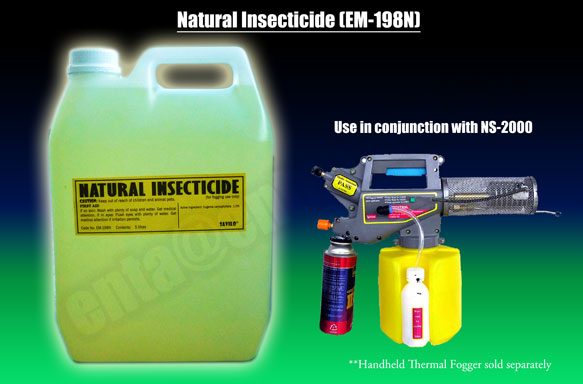
ENTA NATURAL INSECTICIDE Enta Natural Insecticide is formulated for use with thermal fogger. ENTA Natural insecticide is a clear liquid. It is safe to be use in schools, dormitories, food storage or preparation area. Does not contain harmful chemical chemical pesticides, volatile solvents in the formulation. Why wait for people to fog your home. Take control of your own protection. Do it yourself! Key Features:
|
|
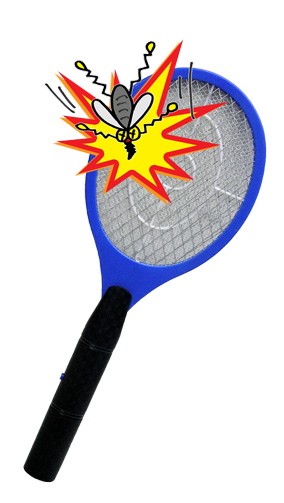
Mosquito Racket/ Bug Zapper (EM-404)Mosquitoes & flies buzzing around is irritating and may be harmful as it can transmit deadly virus like Dengue,Zika, Chikungunya and others. Now you can retaliate with our latest "Mosquito Racket"/ "Bug Zapper". This handy and simply tool is excellent for killing them. Simply swing the racket at your target and the mosquito or insect would be killed instantly upon contact with the mesh by the surge of electrical current rushing into their bodies. You don't have to be a marksman to get them. The large surface mesh area of the racket is designed for a easy sure hit. This new version comes with a protective mesh to prevent accidental contact. This is especially useful when using around children. Suitable for housefiles and other biting insects also. Not harmful to human when use in accordance to instruction. Power Requirement: 2 X AA batteries (Not Included) Safety Note:
|
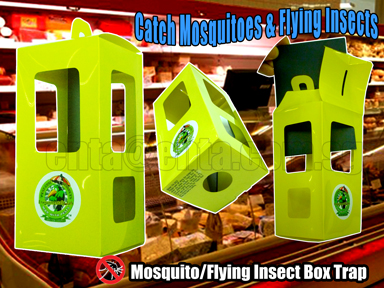
ENTA MOSQUITO/ FLYING INSECT BOX TRAP Model: EN-3623 Dimension: Description: ENTA Mosquito/ Flying Insect Box Trap. This trap is suitable for localised trapping of mosquitoes, flying insects using sticky pads. Insects will be attracted to the glue pad and once enter the trap, it will be trapped in the UV resistance sticky glue pad. Features:
Note: Trap contains 1 set of sticky pad only. |
Copyright © 2016 by Enta Manufacture Industries. All rights Reserved. |
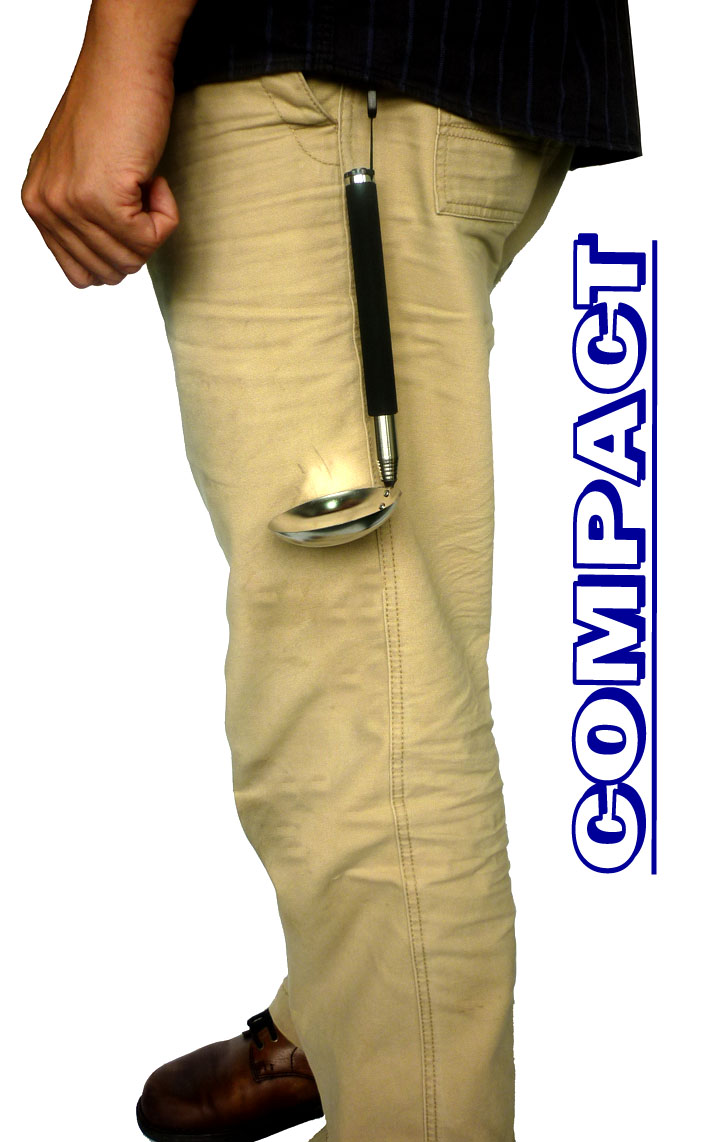
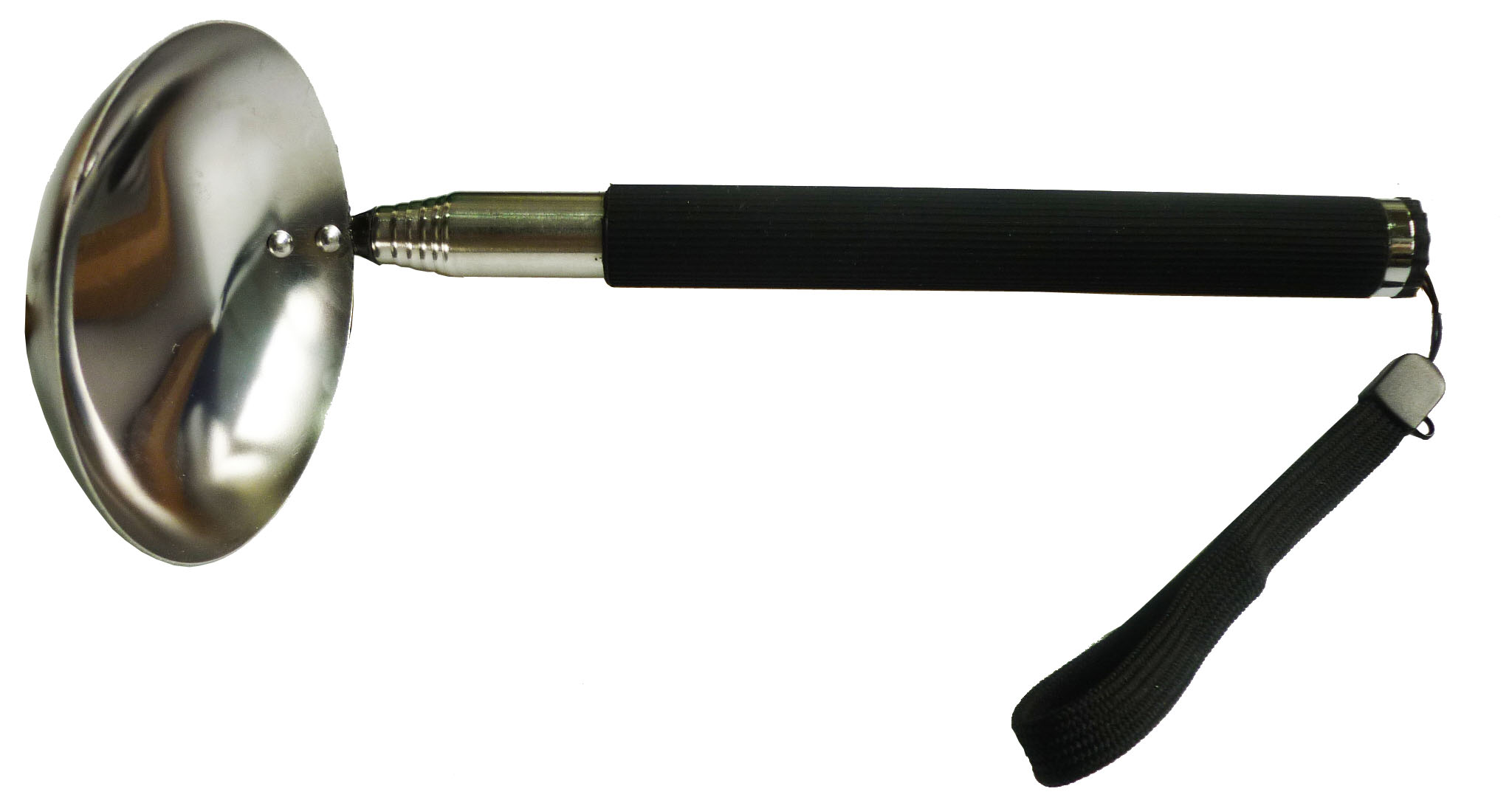
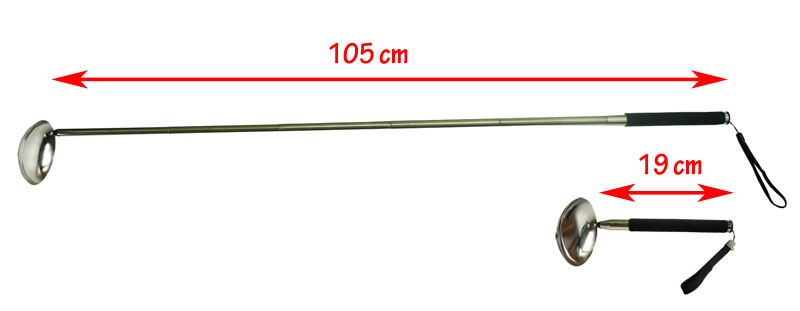
I-ULTRA COMPACT STAINLESS STEEL LARVA DIPPER / SCOOP (Professional Series) The I-Ultra Larva Dipper / Scoop is an extendable telescopic device used to scoop water effortlessly at difficult to reach places. The telescopic rod is extendable from 19cm up to 105cm length. Advantages:
|
MODEL: TELE-2
|
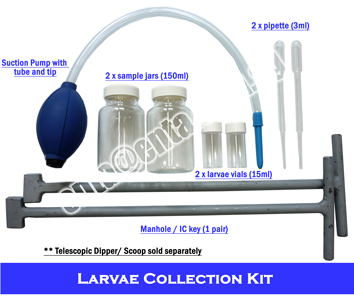
LARVAE COLLECTION KIT (Professional Series) This kit is a collection of handy tools necessary for a thorough inspection and sampling of mosquito larvae and pupae. Kit contains;
**Telescopic Larvae dipper sold separately. |
|
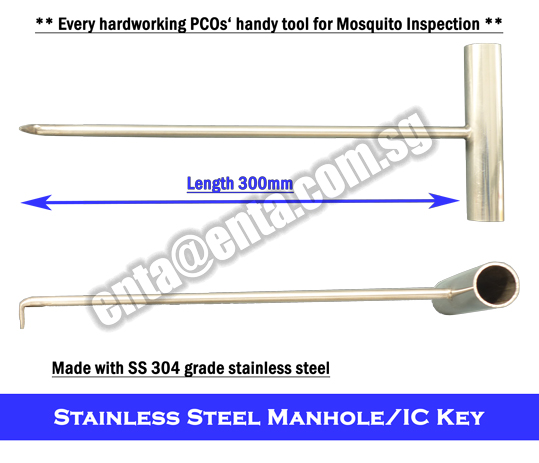
Stainless Steel Manhole/Inspection Chamber Key (Professional Series) Lift up Manhole/ Inspection Chamber covers easily and effortlessly. Opening up Manholes & Inspection Chambers can be quite tiring. Now you can finish the job faster with this handy tool.
**Constructed with SS304 stainless steel for enhanced durability. |
|
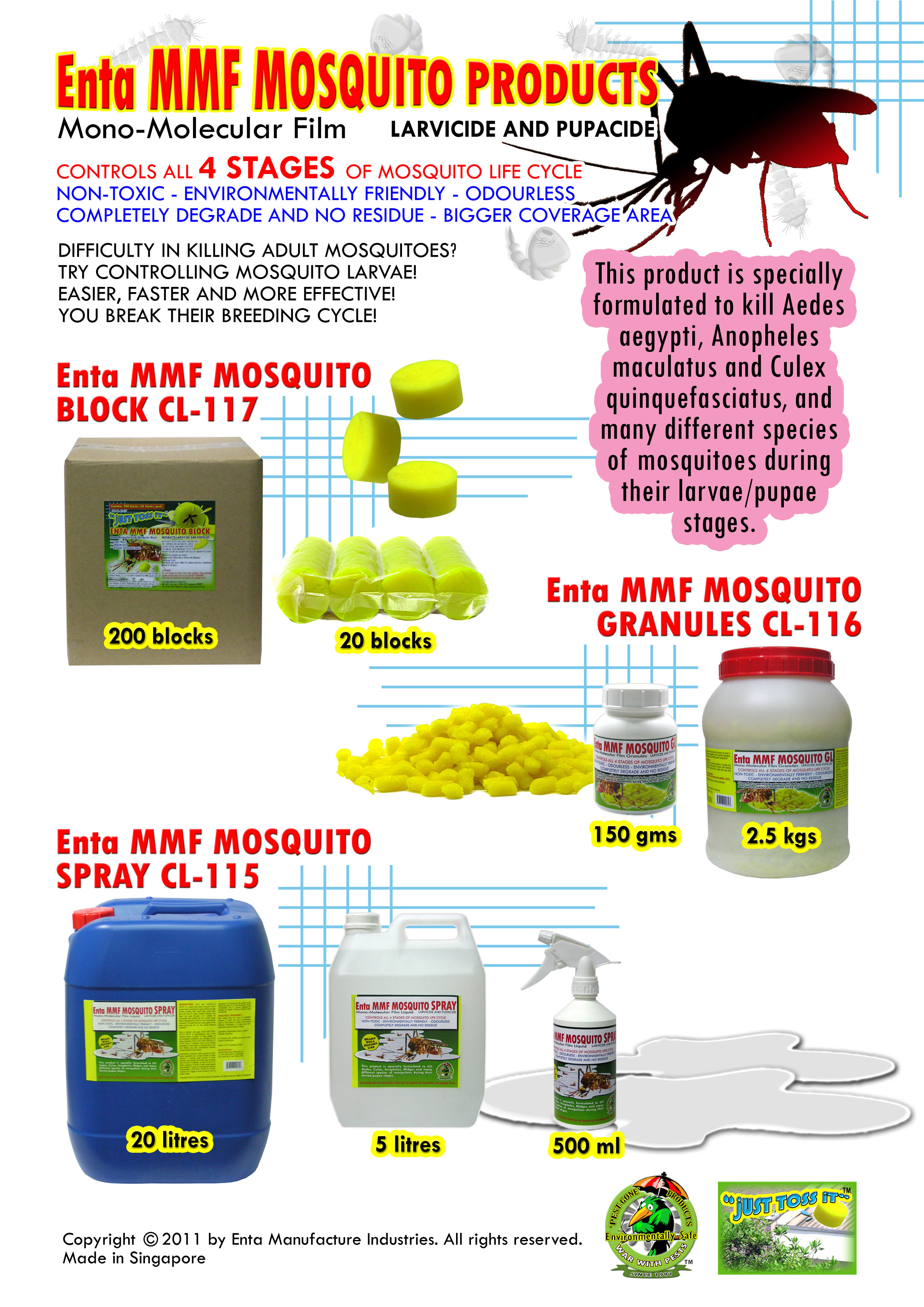
ENTA MOSQUITO MMF PRODUCTS (ADVANCED TECHNOLOGY)
"THE PERFECT SOLUTION TO MOSQUITO CONTROL" CONTROL ALL 4 STAGES OF MOSQUITO LIFE CYCLE! Part 1-Breeding of Mosquitoes
Part 2 - MMF Products and its benefits
Part 3 - Test for MMF Part 4 - MMF Self Spreading property
|
|
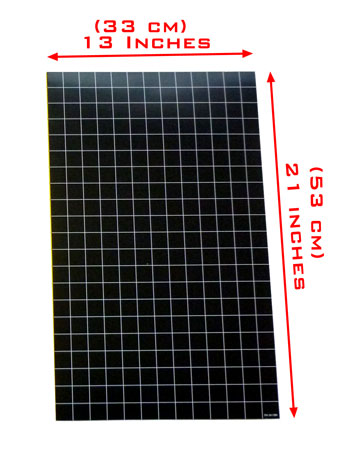
ENTA INSECT GLUE BOARD (WITH GRIDS) Model: Dimension: Description: ENTA INSECT GLUE BOARDS are non-poisonous cardboard glue traps, designed for trapping flying insects, mosquitoes & allow users to quickly identify and determine how many insects have been caught – useful for HACCP procedures. It contains a release paper that protects the glue surface and is easily removed when ready to use. Features:
|
|
Mosquito Death Traps (fitted with AeroHeart Technology)The sole function of AeroHeart found in the mosquito death trap is to generate huge quantities of macro-scaled
temperature fluctuations continuously to be injected into the surrounding
temperature field. These artificial air-borne signals mixes and masked
off the natural temperature fluctuations released by a hot blooded host.
Instead any nearby adult females will be lured by the overwhelming artificial
temperature signals towards the awaiting trap. Numerous of our field tests
show that all mosquitoes or insects with the ability to probe for temperature-fluctuations
during host-seeking will be lured to the trap. Mosquitoes belonging to
the Aedes, Anopheles and Culex species, midges and other biting insects
are among the catch. Our previous field results showed that, when the catch
rate of the trap surpasses the reproductive rate of the mosquitoes residing
within the test site, the test site will be virtually mosquito-free approximately
forty days later. For serious buyers interested in catching more mosquitoes and not just bugs or flying insects! |
|
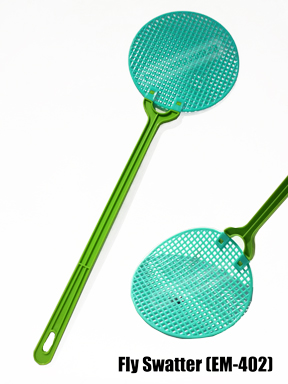
Fly/Insect Swatter (EM-402)
|
Fly/Insect Swatter (EM-402)Handy and simple fly swatter to retaliate against fast moving flies. Suitable for housefiles, mosquitoes and other biting insects. Washable |
Man is most vulnerable in the dark, makes perfect blood-meal hosts where females can readily feed upon. Sleeping humans must be protected from blood-seeking female mosquitoes. Ideally, they should be exterminated before they can even have a chance to blood-feed, to prevent the females from developing eggs. On the other hand, it is extremely difficult to attract blood-seeking mosquitoes. Most nocturnal flying insects are attracted to visible light, but blood-seeking mosquitoes are not. Bug zappers which employ weak UV light as a lure can attract and exterminate most night flyers. However, they cannot lure blood-seeking mosquitoes.
To attract blood-seeking mosquitoes, their host seeking behavior must be first elucidated. The host-seeking behavior of blood-seeking female mosquitoes had remained largely unknown until recently. Electrophysiological studies revealed that blood-seeking female indeed respond to very small temperature fluctuations in the air caused by movements or body heat of a blood-meal host metres away. These small-scale temperature fluctuations cannot be detected by naked human olfactory senses. Their presence can only be confirmed with a cold wire anemometer linked to a digital computer. The study of such temperature fields belonged to thermal fluid sciences, an academical field most people find threatening and intimidating.
Adult females have thermo-sensitive olfactory receptors located on their antennae to collect these air-borne thermal signals under dim lighting conditions and based on the signals they would head for the direction with the highest signal concentration whom, of course, will be the prey itself. However, they are not sensitive to the absolute temperature changes in the ambient surroundings.
The sole function of AeroHeart found in the mosquito death trap is to generate huge quantities of macro-scaled
temperature fluctuations continuously to be injected into the surrounding
temperature field. These artificial air-borne signals mixes and masked
off the natural temperature fluctuations released by a hot blooded host.
Instead any nearby adult females will be lured by the overwhelming artificial
temperature signals towards the awaiting trap. Numerous of our field tests
show that all mosquitoes or insects with the ability to probe for temperature-fluctuations
during host-seeking will be lured to the trap. Mosquitoes belonging to
the Aedes, Anopheles and Culex species, midges and other biting insects
are among the catch. Our previous field results showed that, when the catch
rate of the trap surpasses the reproductive rate of the mosquitoes residing
within the test site, the test site will be virtually mosquito-free approximately
forty days later.
Not all light traps are the same, Mosquito light trap (fitted with AeroHeart Technology) will outperform those without it.
For serious buyers interested in catching more mosquitoes and not just bugs or flying insects!
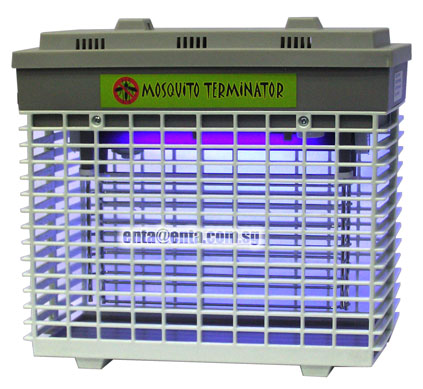

Click to see the typical of a week's catch caught with a mosquito death trap.
For further information enta@enta.com.sg
Back to Home

Copyright © 1996 Enta Manufacture Industries


.png)